AstroSage AI: #1 Indian AI App Leading India’s AI Revolution
Right now, as world leaders, tech executives, and policymakers gather at Bharat Mandapam in New Delhi for the India AI Impact Summit 2026, the big conversations are about policy frameworks, research investments, and the road ahead for artificial intelligence in India.
AstroSage AI has a different kind of contribution to that conversation. Not a whitepaper. Not a roadmap. A working business, already profitable, already at scale, already doing things that most AI companies in India are still planning.
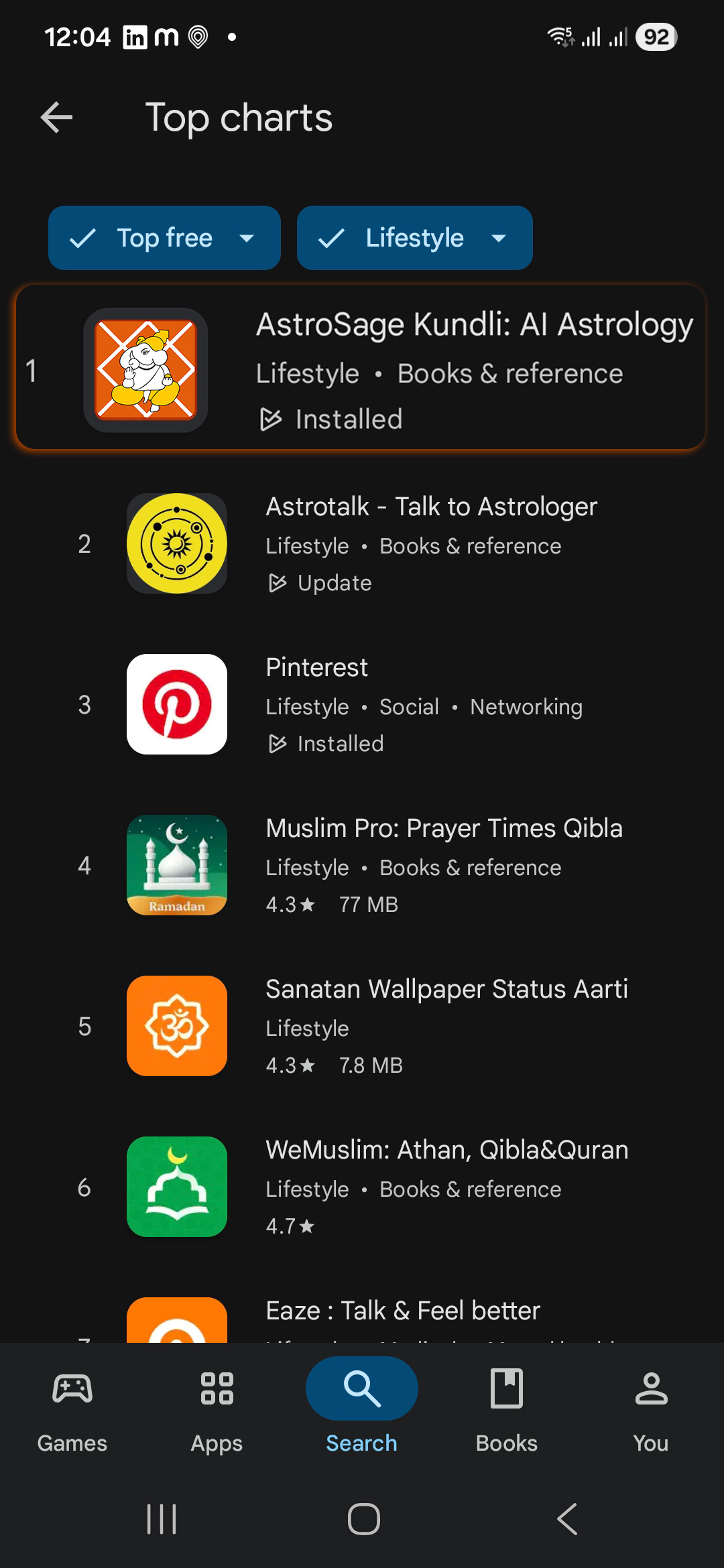
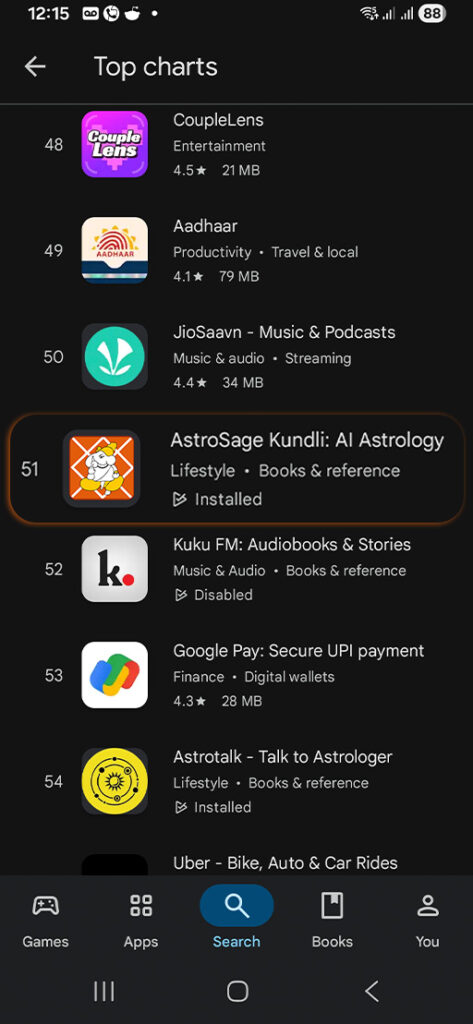
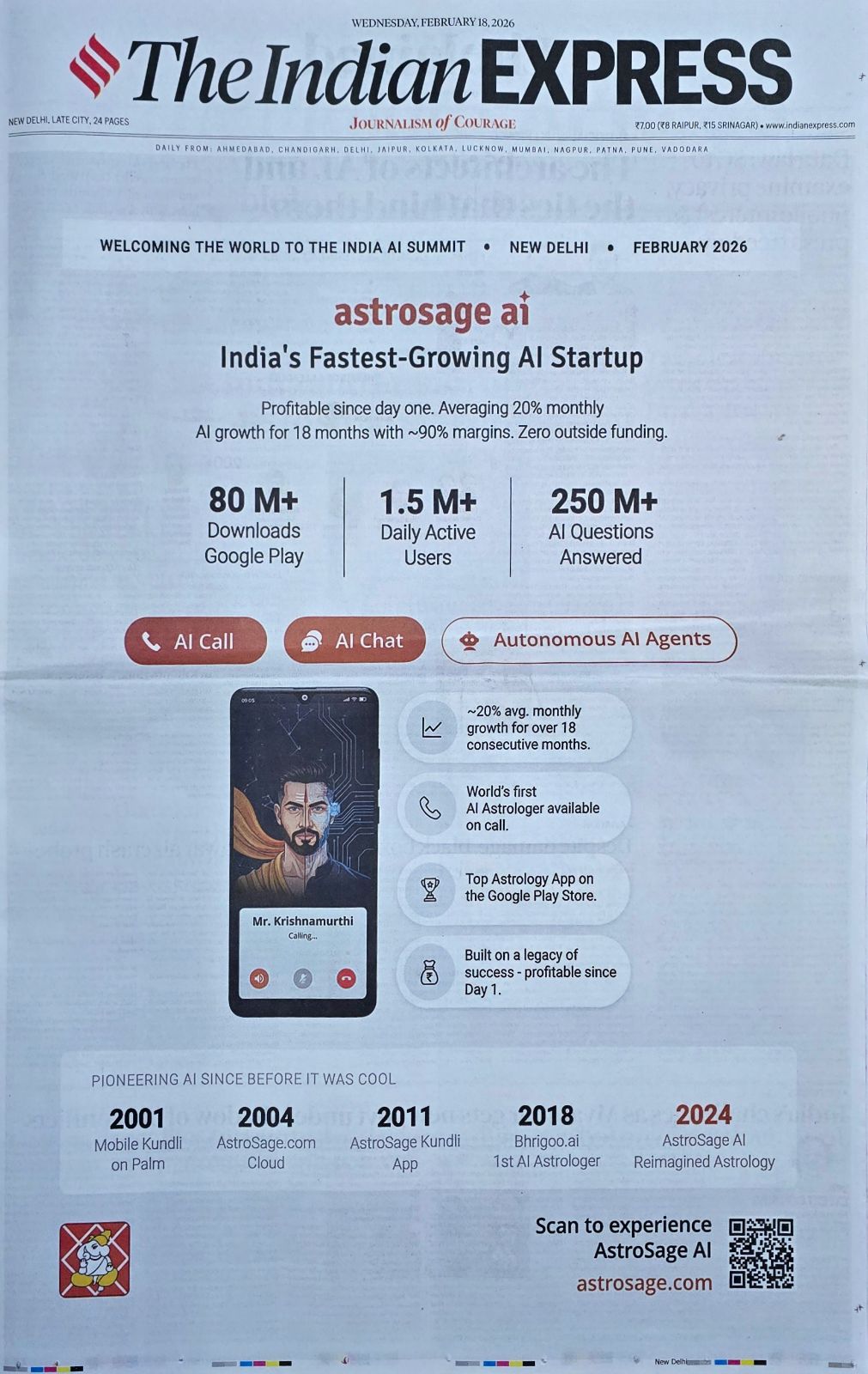
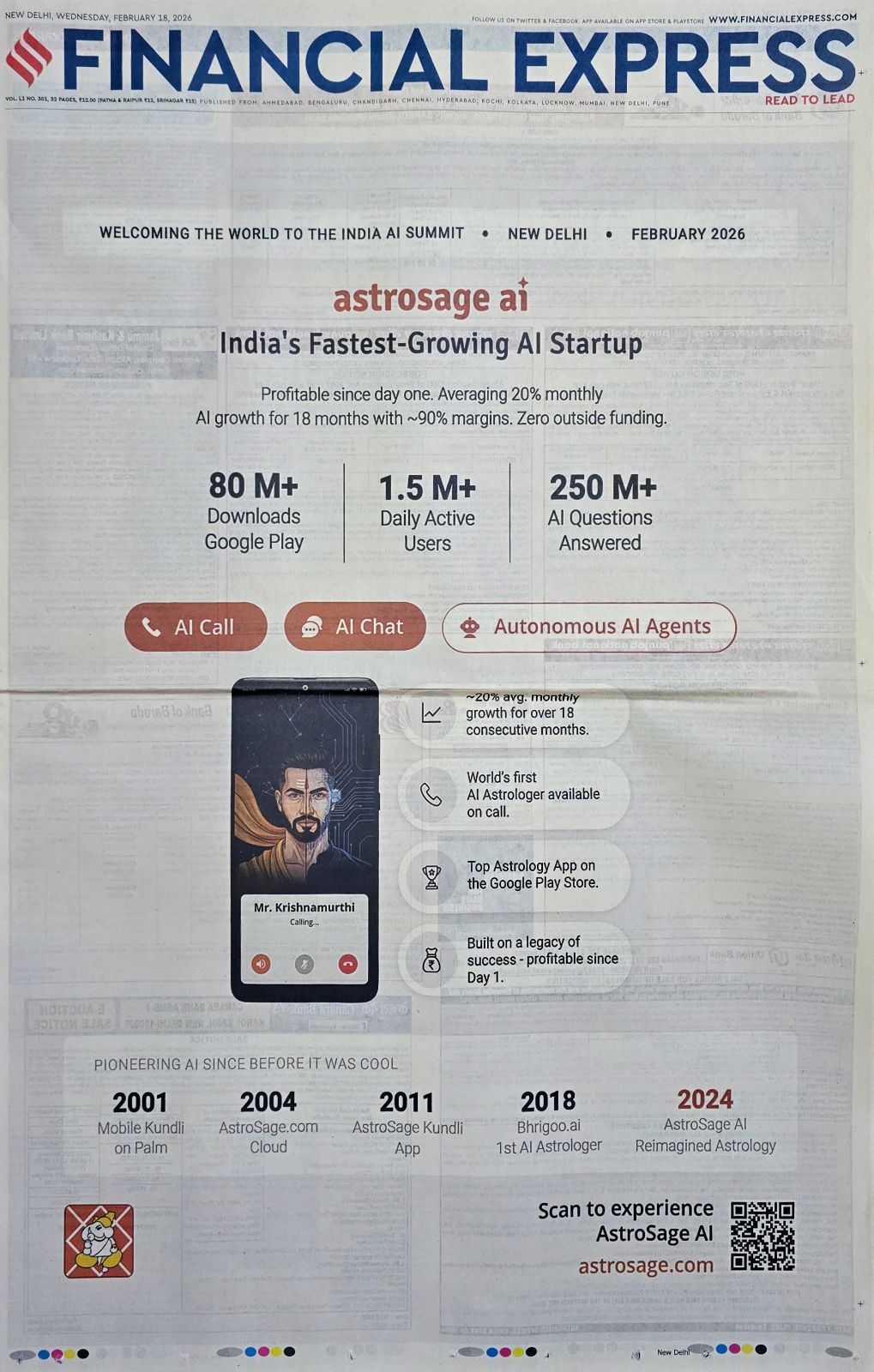
The numbers: 20% average month-on-month AI revenue growth for 18 straight months. Margins close to 90% on AI consultations. Over 25 crore questions answered through AI. The No. 1 astrology app on Google Play Store in India. Ranked 51st among all free apps across every category on the Play Store. Over 80 million downloads. 1.5 million daily active users. Zero rupees of outside funding raised.
Starting Long Before AI Was a Buzzword
The company's history with technology goes back further than most people realize. In 2001, AstroSage launched Mobile Kundli on Palm handheld devices, one of India's first consumer mobile apps, at a time when smartphones did not exist. In 2004, it brought astrology to the internet with AstroSage.com. In 2011, the AstroSage Kundli mobile app launched and eventually crossed 10 million downloads, then 50 million, and is now past 80 million.
Then in 2018, years before ChatGPT turned AI into a household word, AstroSage launched Bhrigoo.ai, one of India's first AI-powered astrology systems. Bhrigoo was a voice-based AI assistant that could answer astrological queries in Hindi and English. While most Indian companies were still treating AI as a research topic, AstroSage was putting it directly in the hands of real users.
From a Palm device app in 2001 to a fully reimagined AI platform in 2024, the journey covers 23 years of consistently being ahead of the room. AstroSage.com went live in 2004 when most Indians were still warming up to the internet. The Kundli mobile app arrived in 2011 and never really stopped growing. And in 2018, quietly, with no big announcement, Bhrigoo.ai became one of India's first AI astrologers. The 2024 relaunch wasn't a pivot. It was the next logical step in a journey that started two decades ago.
The Margin Gap Nobody Talks About
The standard model in digital astrology is a marketplace. Platforms connect users with human astrologers, take a commission, and typically run at 45 to 55% gross margins. The largest players in this category have raised tens of millions of dollars in venture capital to scale what is, at its core, a labor-intensive operation.
AstroSage AI took a different path entirely. It built its AI astrologers in-house. The cost of delivering an AI consultation is a fraction of routing a user to a human astrologer, and the result is margins sitting close to 90%. This is not a services business that happens to use some technology. The economics are closer to a SaaS company than a traditional marketplace.
What makes this more interesting is that users actually prefer the AI side. AI astrologers on the platform are rated 4.6 out of 5 by users, compared to 4.3 for human astrologers. They are available around the clock. They speak every major Indian language, including dialects like Bhojpuri and Braj-bhasha. AstroSage was also the first platform in India to introduce Character AI-style avatar personas, where users can choose from distinct AI astrologer personalities, each with their own name, area of specialization, and conversational style.
Twenty percent average monthly AI growth for 18 consecutive months, at 90% margins, means that growth is translating almost directly into profit. No investor pressure. Profitable from day one.
Voice AI: Not a Demo, an Actual Product
In October 2025, AstroSage AI launched what it describes as the world's first AI Astrologer on Phone Call. Real-time voice conversations with an AI astrologer, in any Indian language, over a regular phone call. Not a prototype. Not a pilot. A live, revenue-generating product that millions of people are already using.
In a country where hundreds of millions of users are far more comfortable speaking than typing, this matters in a very practical way. A woman in rural Bihar can call an AI astrologer and speak in Bhojpuri. A Gujarati-speaking trader can get guidance over the phone in his own language. The global tech industry spent most of 2024 and 2025 talking about Voice AI as the next big frontier. AstroSage already had it running at scale before most of those conversations wrapped up.
What Comes After: Autonomous AI Astrologers
The next phase AstroSage is building moves beyond conversational AI into something more ambitious: autonomous AI astrologers with their own independent digital lives. Their own phone numbers. Their own email addresses. Their own social media accounts on Instagram and Facebook. The ability to make and receive calls, send messages, and interact with users across platforms without any human involvement.
This direction puts AstroSage AI in the same conceptual territory as OpenClaw (formerly Clawdbot, which has accumulated over 145,000 GitHub stars), the most talked-about autonomous AI project globally right now. The distinction is that AstroSage is building this on top of a proven domain with millions of real paying users and a business model that already works.
As founder & CIO Punit Pandey put it: "We shipped Mobile Kundli on a Palm device in 2001. We shipped AI astrology in 2018, years before it was fashionable. We shipped Voice AI in 2025. And now we are building fully autonomous AI astrologers. Every time, we were ahead of the curve. Every time, the market caught up. This is what real AI leadership looks like, not in pitch decks, but in production."
Taking the Story to the Front Pages
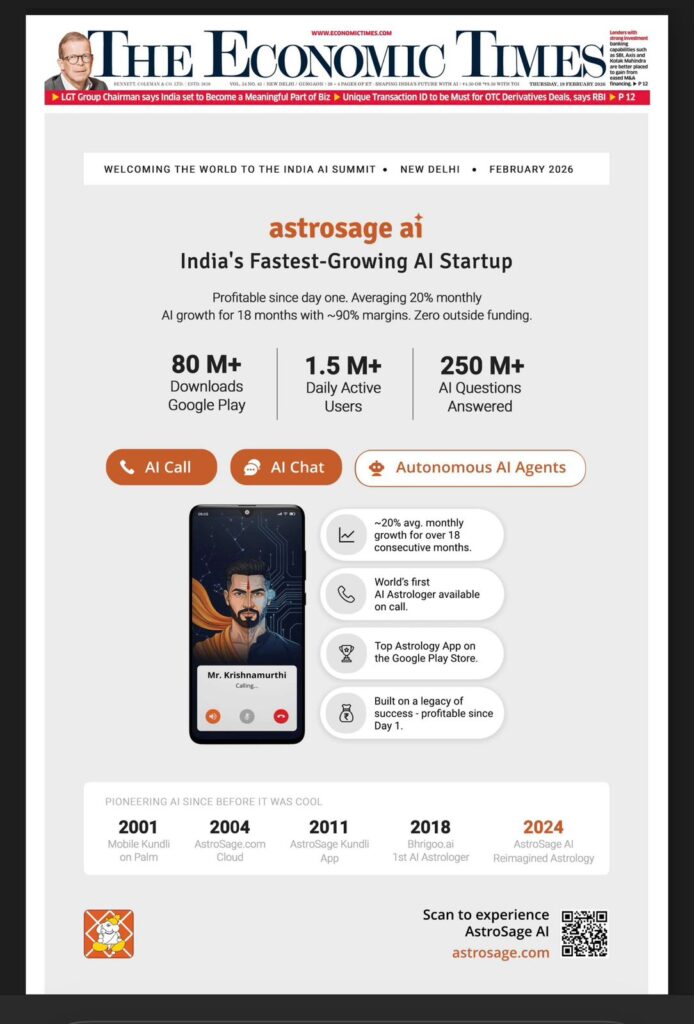
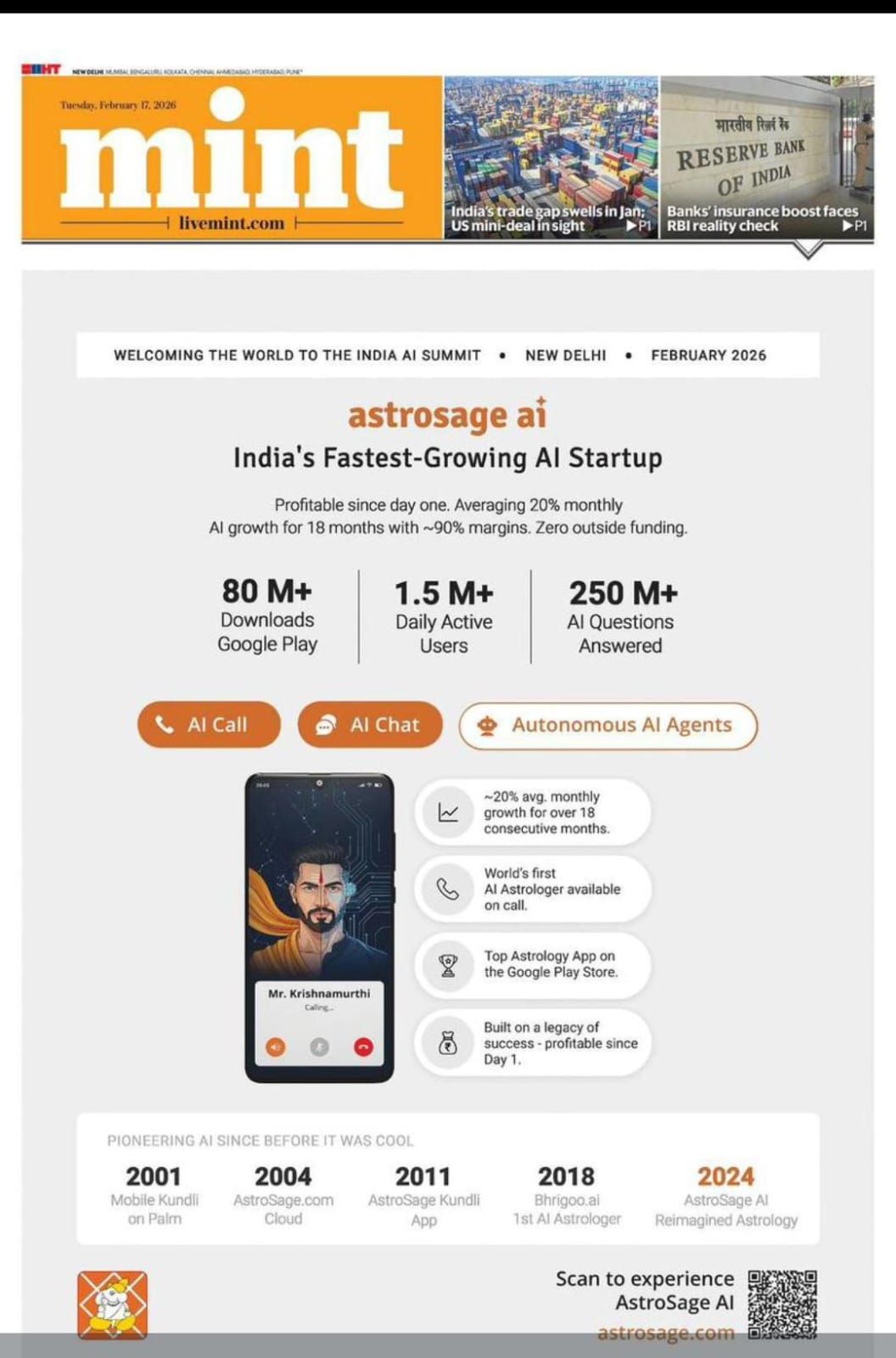
Coinciding with the India AI Impact Summit 2026, AstroSage AI placed full-page advertisements in four of India's leading national and business publications: Economic Times, Mint, Indian Express, and Financial Express. The move was deliberate, putting the company's story in front of the exact audience the summit was drawing to New Delhi.
Built in India, for India
Astrology in India is not a niche hobby or an imported concept. It runs through everyday life for hundreds of millions of people, shaping decisions around marriage, business timing, naming children, and major life choices. AstroSage has been the dominant name in this space for close to two decades, holding over 80% market share in Kundli creation, horoscope matching, and astrology software. The reach is deep enough that even astrologers on competing platforms use AstroSage tools to cast birth charts.
The platform's network includes over 700,000 registered astrologers. With 1.5 million daily active users, AstroSage sees more daily engagement than many well-funded consumer tech companies in India, all built from India, for India, rooted in the culture and traditions of Bharat.
Where It Goes From Here!
AI revenue is already growing at 20% every month, and at that pace, it won't be long before it overtakes every other revenue stream in the business. Internationally, the company is gearing up for launches in France, Germany, Japan, and Brazil, bringing Vedic astrology to audiences who have never had access to it in a format this accessible before.
The India AI Impact Summit will have its share of important conversations, and rightly so. Policy matters. Research funding matters. But if there's one honest way to measure whether a country is actually building real AI capability, it's this: are its companies making AI products that ordinary people choose to use, come back to, and pay for? Not in controlled pilots. Not in boardroom presentations. Every single day, at scale.
AstroSage AI has been doing exactly that for a while now. The summit just gave them a good moment to say it out loud.
You can download AstroSage AI on the Google Play Store and Apple App Store.